
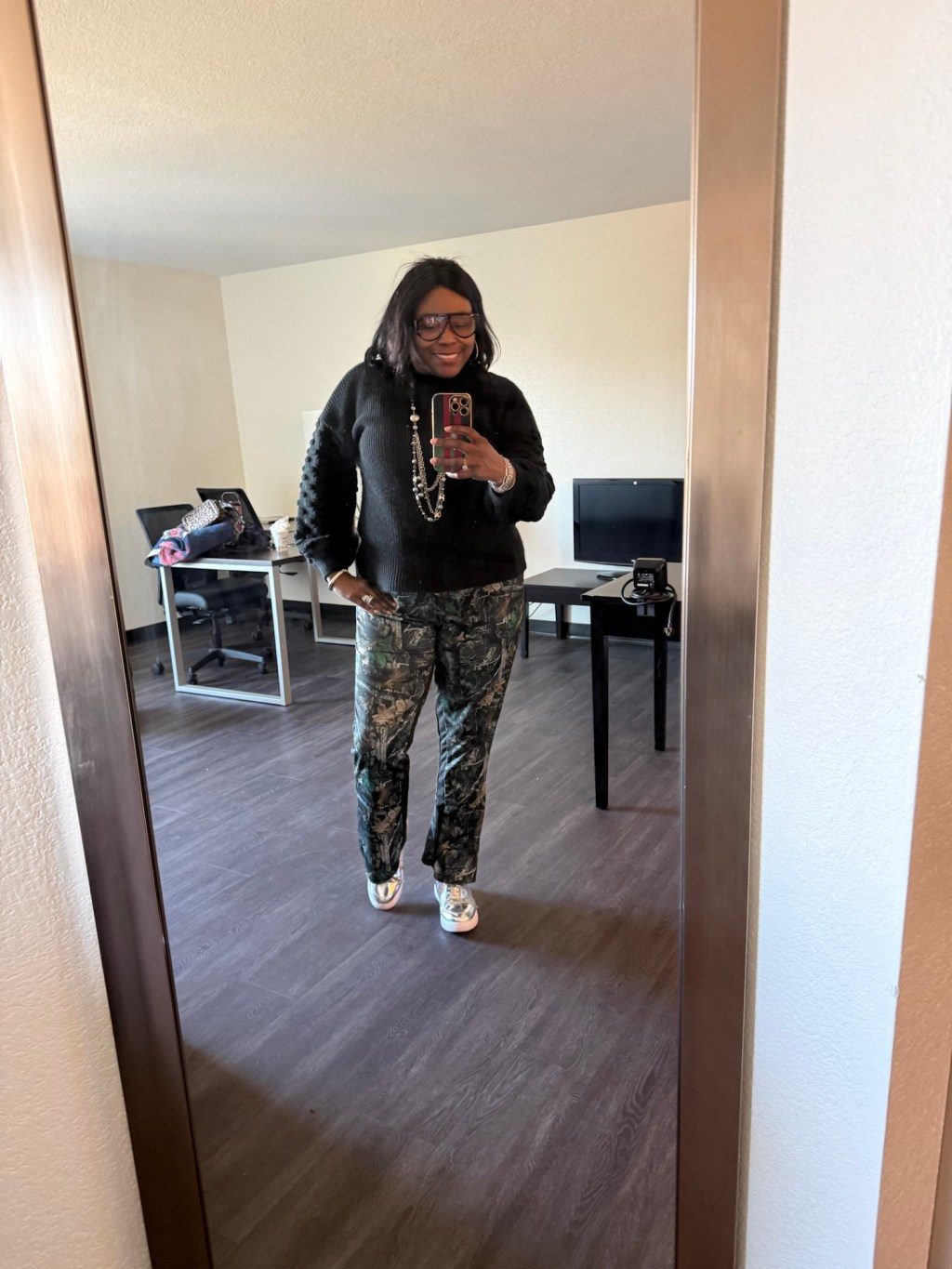
How do significant life events or the passage of time influence your perspective on life?
Life events influence my perspective on life because one of the most important things is family. Whether it is my family that raised me or the family I have raised, it all plays an integral part in my life. More importantly, making sure I’m ok and fulfilled is my goal this year.
I use to pour from a dripping cup. I was more than tired, I was exhausted. I made it work but once I sent my child off to college I said enough was enough. It will start with me filling my cup and then giving the overflow. It’s working slowly, but it’s not an easy task. I have to continually work on putting me first. As I work to improve myself I look for ways to be more resourceful. There is nothing new under the sun, we’re just out here reshaping and redefining the gifts that has already been given.
My resources come from other strong women who have successfully navigated this world and raised healthy families. Here are a few gems I’ve found to be true:
1. Learning to Shift (Perspectives and Habits)
“Shifting” means changing your mental model and behavioral patterns to create a new reality, rather than constantly fighting the old one.
- The “Stop, Start, Continue” Exercise: Evaluate automatic behaviors. What habits should you stop(inefficiencies, negative self-talk), start (daily reflection, specific boundary-setting), and continue(strengths you already have)?
- Cognitive Reframing (“I get to” vs. “I have to”):Transform burdens into opportunities. Reframing a daily commute or a challenging project from a forced obligation to an opportunity to learn, listen, or grow changes your internal response.
- The “Notice, Accept, Inquire, Shift” Technique:
- Notice: Catch yourself in a limiting thought or habit.
- Accept: Acknowledge the emotion without judgment.
- Inquire: Ask, “Is this absolutely true? Is there another way to look at this?”
- Shift: Intentionally move your attention to a more constructive perspective or action.
- 21-Day/90Day Rule: Adopting new habits is slow, often taking 21 days for a new habit to start taking hold and up to 90 days or longer for full integration.
2. Reassessing the Past for Growth
Revisiting the past is not about dwelling on mistakes, but about treating it as a “data archive” to inform your future.
- Narrative Reframing: Revisit painful memories, but focus on the strength gained and the lessons learned. Acknowledge that the pain was a catalyst for change, not a permanent definition of your life.
- Inner Child Work/Reparenting: Address early-life emotional wounds by giving yourself the validation or safety you lacked, promoting self-compassion, and breaking self-sabotaging patterns.
- Using Nostalgia Strategically: Reflect on times you felt authentic and socially connected. This boosts your sense of continuity, authenticity, and motivation.
3. Mental Fortitude (Resilience Building)
Mental fortitude is built in small, daily actions, not just in crisis, and it resembles building a physical muscle.
- Small Wins Technique: Instead of trying to fix everything at once, focus on one small, consistent action daily, such as meditating or staying on task for 30 minutes.
- The “Tenth Rep” Concept: Do the extra, unnecessary, or difficult thing. Choose to create instead of consume, or ask an extra question. This proves to yourself that you are disciplined.
- Controlled Exposure: Regularly step outside your comfort zone to build capacity for stress, ensuring that when true crises arrive, you are prepared.
- Acceptance of Change: Accept that some goals are no longer attainable and pivot, rather than resisting reality, which wastes emotional energy.
4. Perception of Time (Hacking Your Clock)
Time is subjective, stretching and contracting based on emotion and engagement.
- Novelty Slows Time: Monotony makes time fly. Trying new things, taking new routes, or changing your workspace makes life feel richer and longer in retrospect.
- Savoring (Prospectively Slowing Time): When you are in a happy moment, bring your full attention to it—savor it. This makes the present feel longer, rather than letting it flash by.
- Using “Time-Stamping Anchors”: Pair key moments with a sound (chime), scent (candle), or action to segment your day, increasing your presence.
- Meditation and Mindfulness: Regular mindfulness practices actually slow down your perception of time, allowing you to live unbound by the “tyrannical” pressure of the clock.
- Deep Work Flow State: When fully immersed in a difficult, high-value task, you enter a “flow state” where your perception of time disappears, allowing for maximum productivity.
As always, “Never negate the Nu-N-U”



 nulyfenuways
Leave a comment